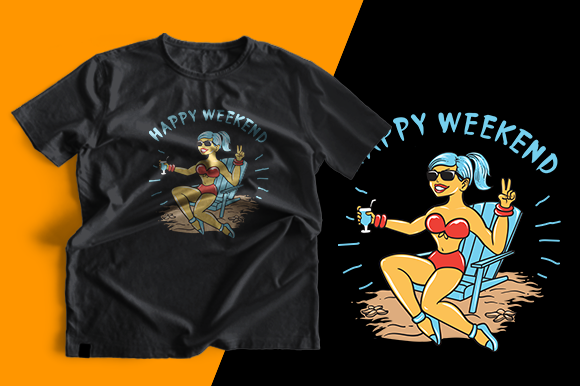
Happy Weekend T-Shirt Design: A Pro Review
As someone who spends more time staring at stitch simulations than actual weekends, I approach every new machine embroidery design with a mix of optimism and skepticism. We've all been there: you download a cute graphic, load it into your software, and realize the density is going to turn your fabric into cardboard. That's why I took a close look at the T-shirt Design - Happy Weekend. While this specific item is listed under Freebies and categorized as Graphics, my job is to evaluate how it translates from a vector concept to a tangible, stitched reality for real-world projects.
First Impressions: Mood and Layout
The moment you open the file, the vibe is unmistakable. The "Happy Weekend" theme carries a relaxed, cheerful energy that feels perfect for casual wear. What stands out immediately is the construction. The description notes it is made with 100 vector shapes that are fully resizable. For an embroiderer, this is a double-edged sword that requires attention. Vector scalability means you can shrink it for a baby onesie or enlarge it for a tote bag without losing definition, but it also means you are responsible for setting the stitch parameters.
The layout feels balanced, not cluttered. In the world of custom apparel, negative space is just as important as the thread coverage. This design doesn't seem to overfill the area, which suggests it will drape well on softer fabrics like cotton jersey or French terry. The visual personality is playful yet clean, making it a strong candidate for boutique branding where you want the product to feel handmade but professional.
Real-World Application: From Screen to Stitch
Let's talk about where this actually works. I recently had a client request a run of custom sweatshirt embroidery for a local yoga studio's retreat. They wanted something that said "relax" without looking like a generic tourist souvenir. The T-shirt Design - Happy Weekend fits this brief perfectly. Because the files included are AI 10, EPS 10, PDF, SVG, and PNG, the workflow is flexible. You aren't stuck with a pre-digitized DST file that might have weird jump stitches; you have the raw assets to create a perfect embroidery file tailored to your machine.
Imagine using this for a tote bag design. Canvas bags can handle higher density, so you could push the saturation of the colors here. Or consider it for baby embroidery on a soft muslin blanket. Since the shapes are distinct, you could easily simplify the fill patterns to keep the finished product soft against sensitive skin. It also works wonderfully as an embroidered patch. If you digitize the outer edge as a tight satin border, this becomes a sellable accessory for an Etsy seller looking to expand their inventory beyond just garments.
For those running a craft business, the versatility is key. This isn't just for shirts. Think about holiday embroidery gifts—maybe a set of kitchen towels for a housewarming present. The "weekend" sentiment aligns perfectly with leisure time at home. Even for commercial embroidery projects like staff uniforms for a coffee shop, this design adds a touch of personality that standard block lettering lacks.
Technical Considerations and Fabric Choices
Here is where experience matters. The product description mentions it is "possible and easy change color for dark t-shirt." This is a crucial detail. When working on dark fabrics, your thread colors need to pop. If you are digitizing this yourself from the vector shapes, ensure you use a dense underlay to prevent the garment color from bleeding through the top stitching. On light fabrics, you have more freedom with stitch density, but on darks, you might need to adjust your satin stitch widths to ensure coverage without bulk.
Be cautious with hoop size limitations. While the vector is resizable, if you scale it up too much for a large back-of-shirt placement, you might exceed your machine's maximum hoop capacity, requiring a multi-position setup which can introduce alignment errors. Conversely, if you shrink it too small for a cap or a pocket, those 100 vector shapes might become too intricate. Tiny details can get lost in the stitching process, especially on textured fabrics like pique polo shirts or looped towels.
Stabilizer choice is non-negotiable here. For stretchy fabrics like t-shirts, a cut-away stabilizer is essential to maintain the shape of the text and graphics after washing. If you are testing this on a woven linen for a pillow cover, a tear-away might suffice, but always test on scrap fabric first. I cannot stress this enough: never skip the test stitch. Run the design on a similar weight fabric to see how the corners hold up and if the running stitch or fill areas cause any puckering.
Maximizing Value and Professionalism
Using a high-quality base graphic like T-shirt Design - Happy Weekend elevates the perceived value of your handmade product. Customers can tell the difference between a pixelated print and a crisp, well-digitized embroidery. When you take the time to refine these vector shapes into a proper stitch file, you build customer trust. It shows you care about the longevity and look of the finished product.
For digital product sellers, these assets are gold. You can create stunning printable mockups using the included PNG Transparent 300dpi files to showcase your services before you even stitch a thread. This helps in marketing your small shop product lines effectively. However, remember that selling the digital file itself versus selling the physical embroidered item involves different licensing rules. Since this is a freebie, always double-check the specific license terms regarding commercial use of the derived embroidery files.
Final Verdict for Makers
The T-shirt Design - Happy Weekend is a solid foundation for a variety of projects. It shines when used thoughtfully on appropriate materials. Whether you are creating a personalized gift for a friend or stocking up inventory for a craft fair, this design offers the flexibility needed for modern makers. Just remember, the vector file is only half the battle; your digitizing skills and material choices will determine the final quality. Treat it as a premium design asset, respect the technical limits of your machine, and you'll have a winner that brings a little bit of weekend joy to every stitch.